Chapter 1981w
From Running Containers to Maintaining a Service
Connect Docker experience to Kubernetes responsibilities and distinguish desired state from observed state.
From Core Concepts to Deployment and Operations — 2026 English Edition
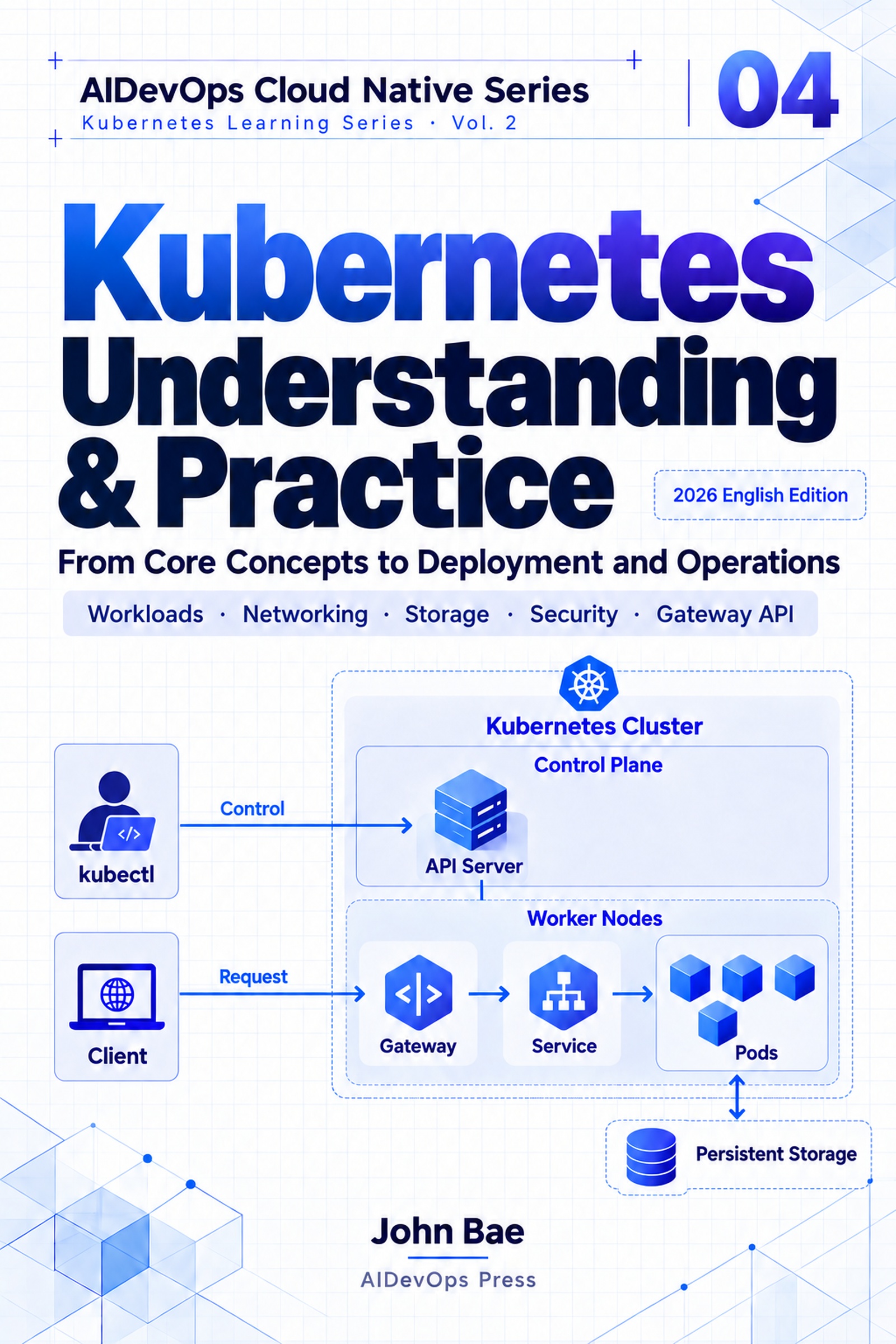
Overview
Move from a first Kubernetes deployment to a system you can operate and explain. Twenty chapters follow Mini CloudShop through Pods, Deployments, Services, Traefik Ingress, configuration, persistent storage, probes, HPA, Jobs, StatefulSets, RBAC, NetworkPolicy, and Gateway API. Recorded lab output, 44 diagrams, a 125-term glossary, four worked cases, and forty additional questions with reasoning connect concepts to observed behavior. Finish by rebuilding the application in a fresh three-node cluster and running recovery drills.
Docker 29.2 · kind 0.33 · Kubernetes v1.37 · Traefik 41.6 · Gateway API 1.5.1
25,431 words (20 chapters + 4 appendices)
Local edition complete — preparing KDP publication
An Nginx Web front end calls an Express API backed by Redis. The same small application makes request paths, workload recovery, storage lifetime, and policy boundaries visible.
Enterprise cloud architect and founder of AIDevOps. His teaching connects application architecture, platform operations, and evidence-based troubleshooting.
Table of Contents
Chapters 1–6 establish the control model and local environment. Chapters 7–14 connect workloads, networking, configuration, storage, health, and scaling. Chapters 15–20 add finite tasks, StatefulSets, policy, Gateway API, diagnosis, and a fresh-cluster recovery lab. Kubernetes Learning Series, Volume 2.
Connect Docker experience to Kubernetes responsibilities and distinguish desired state from observed state.
Trace declarations through the control plane and follow user requests through the application.
Inspect contexts, namespaces, resources, logs, and Events before changing a cluster.
Create a three-node kind cluster and load locally built application images.
Observe Pod lifetime, container sharing, and what happens when an unmanaged Pod disappears.
Read API version, kind, metadata, and spec as a resource contract.
Follow Deployment and ReplicaSet reconciliation, scaling, rolling updates, and rollback.
Use namespaces, labels, and selectors deliberately and diagnose mismatched targets.
Connect stable Service names to changing Pods and inspect EndpointSlices.
Install Traefik, route Web and API requests, and distinguish rules from the controller.
Deliver ConfigMap and Secret values and verify when changed configuration reaches a process.
Compare temporary storage with PVC-backed Redis data and test persistence after replacement.
Set resource requests and limits; distinguish startup, readiness, and liveness probes.
Use measured CPU for HPA decisions and recover a failed application release.
Run bounded Jobs and CronJobs; inspect completion, retries, and failure limits.
Preserve StatefulSet identity and storage while understanding independent Redis members.
Verify quotas, default resources, RBAC permissions, and denied versus allowed network clients.
Replace the Ingress entry point with Gateway API and inspect route acceptance.
Diagnose scheduling, image, memory, and process failures with status, logs, and Events.
Rebuild the full application in a fresh cluster and practice data, release, and policy recovery.
A question-first command reference.
Follow evidence through a justified diagnosis and recovery.
Authoritative references for the lab tools and APIs.
Two additional questions for every chapter.
Companion Materials
Every companion/... path referenced throughout the book maps to the same path inside the zip downloadable from this page. The free ZIP contains 34 files: English API/Web sources, locked npm dependencies, a three-node kind configuration, staged manifests, diagnostic examples, and a learning record. Start with README.md and follow the chapter sequence.
README.md
Archive layout and lab sequence.
api/, web/
API and Web source used to build the lab images.
k8s/
Progressive workload, Service, storage, policy, and Gateway manifests.
Publication Status
The English EPUB, 196-page Reading PDF, and 200-page print interior passed local publication checks. EPUBCheck reported zero errors or warnings, and all 20 live checks passed. Kindle/KDP account-side preview and publication remain pending. The free companion is available here.
AIDevOps Cloud Native Series
Learning Volume 1 introduces Docker and a first Kubernetes application; this is Volume 2. Continue to Kubernetes Production Engineering for production architecture and operations. Repository series numbers differ from learning-volume numbers.